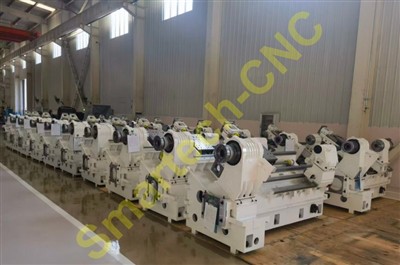
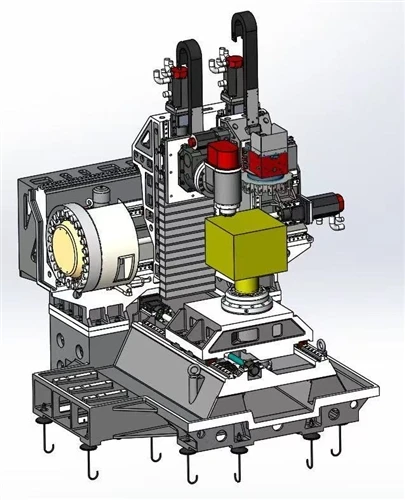
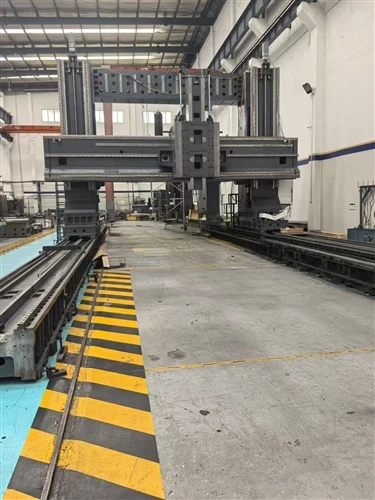
The earliest milling machine was a horizontal milling machine invented by American E. Whitney in 1818. To mill the spiral grooves of twist drills, American J.R. Brown created the first universal milling machine in 1862, a prototype of the gantry milling machine. Gantry milling machines appeared around 1884. Semi-automatic milling machines emerged in the 1920s, with the worktable using stops to automatically switch between "feed-rapid" and "rapid-feed".
After 1950, milling machines developed rapidly in terms of control systems. The application of digital control greatly improved the automation level of milling machines. Especially after the 1970s, microprocessor-based digital control systems and automatic tool changers were applied to milling machines, expanding the machining range and improving machining accuracy and efficiency.
With the continuous intensification of mechanization, CNC programming began to be widely used in machine tool operations, greatly freeing up labor. CNC-programmed milling machines will gradually replace manual operation. The requirements for employees will become increasingly higher, but the resulting efficiency will also increase.