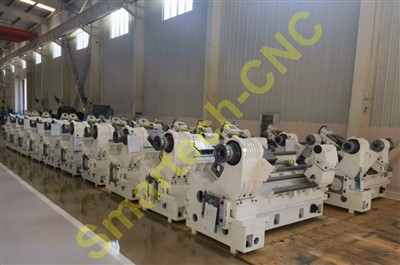
After a workpiece is clamped once on the machining center, the digital control system automatically selects and changes tools according to different machining processes. It automatically adjusts the spindle speed, feed rate, and tool trajectory relative to the workpiece, along with other auxiliary functions, sequentially completing multiple machining operations on multiple surfaces of the workpiece. It also features various tool changing and selection functions, significantly improving production efficiency.
Due to the concentration of processes and automatic tool changing, machining centers reduce the time spent on workpiece clamping, measurement, and machine tool adjustment, allowing the cutting time to reach approximately 80% of the machine tool's operating time (compared to only 15-20% for ordinary machine tools). It also reduces workpiece turnaround, handling, and storage time between processes, shortening the production cycle and resulting in significant economic benefits. Machining centers are suitable for small to medium batch production of parts with complex shapes, high precision requirements, and frequent product changes.
Compared with vertical machining centers, horizontal machining centers have a more complex structure, occupy a larger area, and are more expensive. Moreover, it is inconvenient to observe the machining process and to clamp and measure parts. However, it is easier to remove chips during machining, which is beneficial to the machining process.