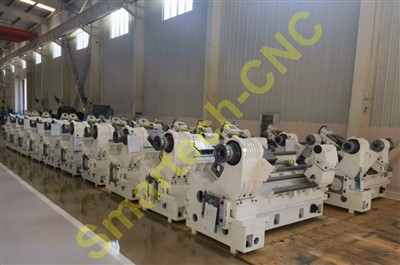
As a core piece of equipment in modern manufacturing, the selection of a vertical machining center requires comprehensive consideration of multiple factors, including performance, cost, applicability, and after-sales service. Currently, the price range for vertical machining centers on the market typically ranges from several hundred thousand to several million yuan, with specific prices varying depending on brand, configuration, functions, and precision level. For example, an economical vertical machining center might cost between 300,000 and 800,000 yuan, suitable for small-batch processing or startups; while a high-end five-axis vertical machining center could cost over 2 million yuan, suitable for complex surface machining or high-precision applications.
From a performance perspective, the core indicators of a vertical machining center include spindle speed, feed rate, repeatability, and rigidity. Spindle speed directly affects cutting efficiency; high-end models can reach speeds of over 20,000 rpm, suitable for high-speed machining; while economical models typically operate at 8,000-12,000 rpm, meeting general machining needs. Regarding feed rate, high-end models can achieve rapid traverse speeds of over 60 m/min, significantly reducing non-cutting time. Repeatability is a key indicator of machine tool stability. High-end models can achieve accuracy of ±0.005mm, while economy models typically range from ±0.01-0.02mm.
Cost considerations include initial purchase cost, operating cost, and maintenance cost. For initial purchase costs, imported brands like DMG MORI and MAZAK are more expensive but offer more comprehensive after-sales service; domestic brands like Haitian Precision and Neway CNC offer better value for money and are suitable for companies with limited budgets. Operating costs include energy consumption, tool consumption, and labor costs; high-end models may have lower unit costs due to their higher efficiency. Regarding maintenance costs, imported brand spare parts are more expensive but have lower failure rates; domestic brand spare parts are readily available, resulting in relatively lower maintenance costs.
Applicability considerations depend on the material being processed, workpiece size, and processing type. High-speed machining centers are more efficient for machining light metals such as aluminum alloys and copper; while for machining heavy materials such as steel and cast iron, high-rigidity models are required. Regarding workpiece size, small vertical machining centers typically have table sizes below 500x500mm, suitable for precision parts machining; large models have table sizes exceeding 2000x1000mm, suitable for mold or large structural component machining. In terms of machining types, three-axis vertical machining centers are suitable for planar and simple curved surface machining; five-axis machining centers can handle complex curved surface machining, such as for aerospace blades and medical implants.
Regarding industry standards, vertical machining centers must comply with national standards such as GB/T 18400-2010, covering safety, performance, and environmental requirements. When purchasing, it is necessary to confirm whether the machine tool has CE certification or ISO 9001 quality management system certification to ensure equipment reliability.
In terms of after-sales service, it is necessary to examine the supplier's technical support capabilities, spare parts supply speed, and training services. Large suppliers typically offer 24-hour response service, while smaller suppliers may only offer weekday support. Regarding spare parts supply, imported brands may have longer lead times, requiring advance stockpiling; domestic brands offer faster spare parts supply.